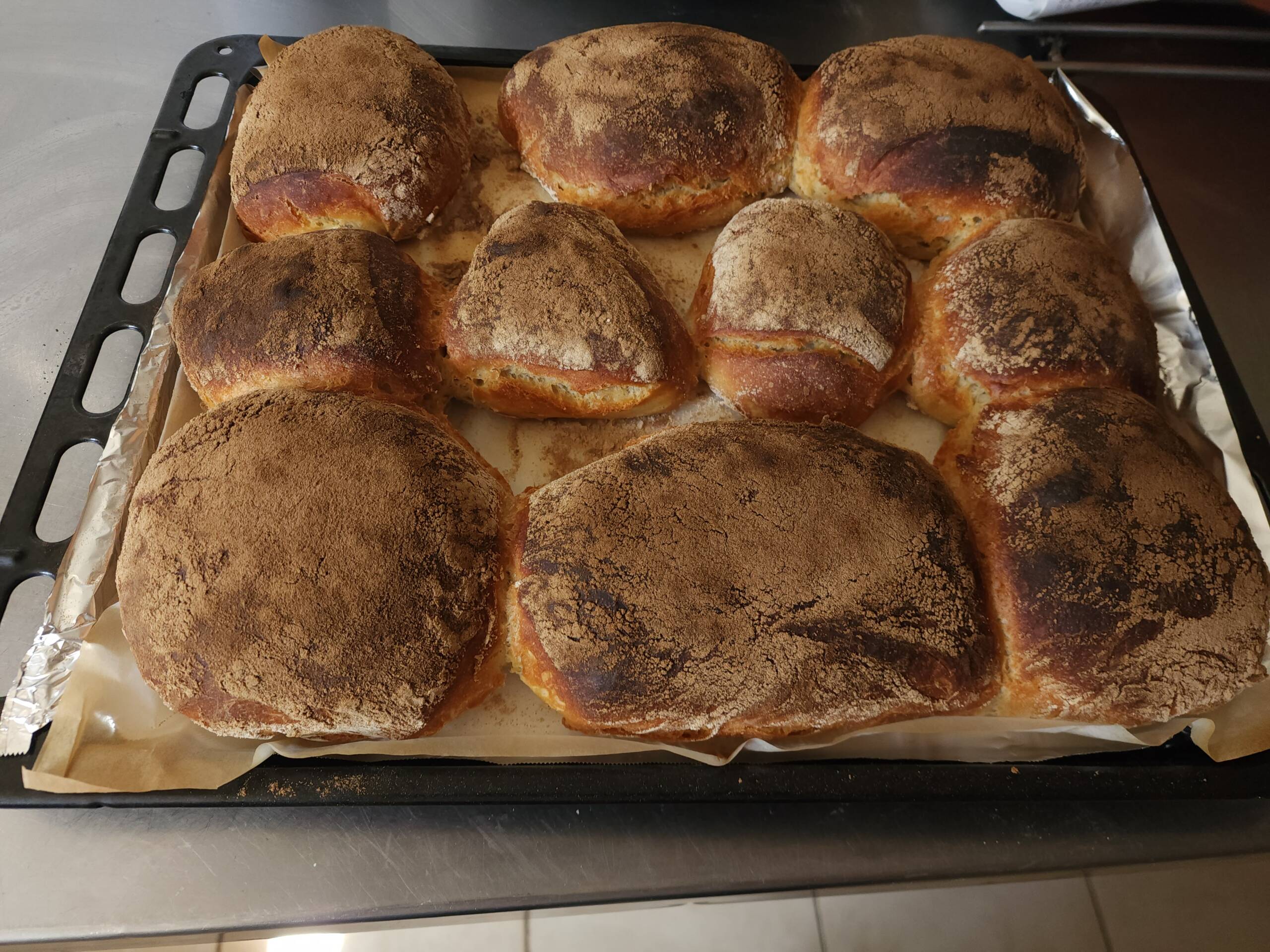
A heavy tray pulled straight from the oven, still sitting on baking paper and foil, filled edge to edge with ciabattas that look like they barely survived the heat—and that’s exactly the point. Each loaf is puffed and irregular, some taller, some squatter, all wearing that dusty coat of flour on top, baked into a cracked, matte crust. The flour isn’t decorative here; it’s scorched in places, darker patches telling you where the heat really hit. The sides glow amber to deep brown, with those slightly torn seams where the dough expanded too fast to stay polite. You can almost hear the crust crackle if you tap it, that hollow sound bakers chase without always admitting it. The oven tray itself looks small under the weight of them, like it had no say in the matter, and the stainless steel counter underneath reflects just enough light to remind you this was work, not styling. Real bread, made fast, baked hard.
Good ciabatta doesn’t come from patience, it comes from commitment. Two things matter here and they’re not negotiable: a high temperature, 240°C, and an oven that gets there quickly. No gentle warm-up, no slow climb while the dough sits around losing its nerve. You want shock. You want the dough to hit the heat before it has time to think. That’s how you get lift instead of spread, structure instead of pancakes, crust before moisture escapes. People talk about hydration percentages and fancy flour, but honestly, without a hot, fast oven, you’re just baking excuses. Who has the patience to wait twenty minutes for an oven to warm up anyway? Bread like this rewards impatience, the good kind, the kind that trusts heat and timing more than rituals. Let it rip, shut the door, and don’t peek. The ciabattas already know what to do.
Leave a Reply