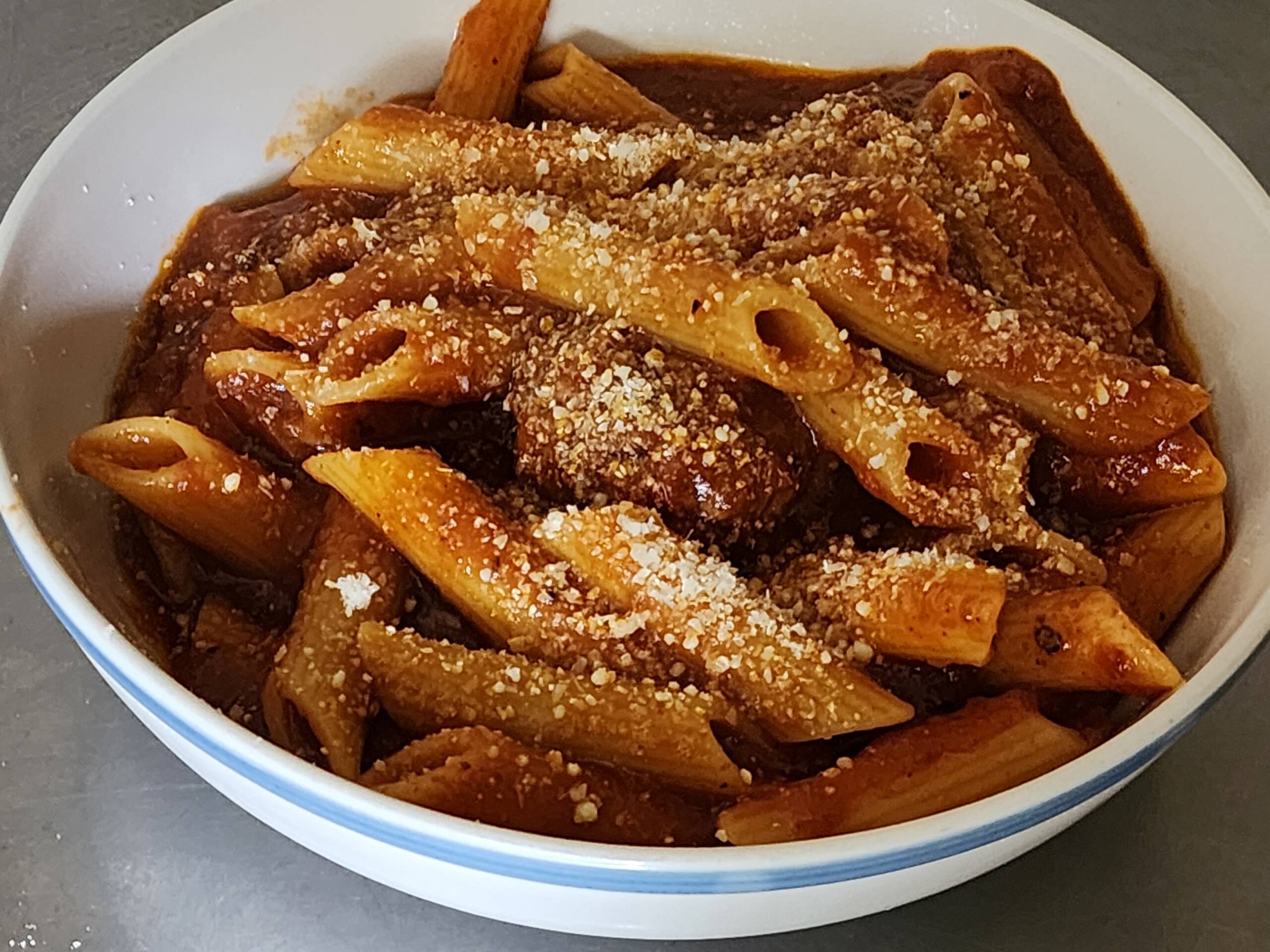
The bowl sits there with a kind of quiet confidence, white ceramic with a thin blue rim, holding a dense, generous tangle of rigatoni coated in a deep brick-red sauce that looks slow and serious, the kind that has been left alone long enough to figure itself out. The pasta tubes are ridged and sturdy, catching the sauce in their grooves, some of them glistening, others half-submerged, like they’ve surrendered to it willingly. A couple of meatballs push up from the center, rounded and dark, not oversized, not trying to impress, just present, their surfaces glossy with sauce and softened edges that suggest they’ve been simmering rather than fried into submission. There’s grated cheese scattered over everything, unevenly, imperfectly, little pale granules clinging to pasta edges and melting slightly where the sauce is hottest, adding texture rather than a blanket. You can almost feel the weight of it by looking, this is not a light bowl, not apologetic food, it’s the kind that sits heavy in the hand and promises to slow your evening down a bit, in a good way.
What makes it work is that nothing feels overworked. The sauce isn’t bright or acidic; it’s dark, reduced, with that muted sheen that comes from time rather than tricks. The rigatoni hold their shape, thick enough to stand up to the meatballs without turning soft or collapsed, and the meatballs themselves look compact but tender, the sort that break with a spoon rather than fight back. Even the cheese feels restrained, just enough to dust the top and hint at salt and umami without stealing focus. It’s the kind of dish you don’t photograph ten times from different angles because you already know what it tastes like, even if you haven’t had a bite yet. Comfort without nostalgia cosplay, familiar without being boring, a bowl that doesn’t shout but doesn’t whisper either. You sit down with this, maybe lean back a little before starting, because you know once you begin, there’s no rush, and honestly, why would there be.
Leave a Reply