Most overcooked chicken isn’t a recipe problem. It’s a guessing problem. The recipe says forty-five minutes, the oven runs hot, the bird is a little smaller than the one the recipe had in mind, and by the time the juices “run clear” the breast has been dry for ten minutes.
A thermometer ends the guessing. Not a dial one that lives in the drawer and reads somewhere near the right number after half a minute. An instant-read probe that tells you what’s happening inside the meat in a second or two, while the oven door is still open.
Of all the cheap kitchen tools, it’s the one that changes your results on the first day you own it.
What the Numbers Actually Are
You only need a handful. Chicken and turkey are safe at 74°C (165°F), measured in the thickest part of the breast, away from the bone. Thighs taste better higher, around 80 to 85°C (175 to 185°F), because the connective tissue needs the extra heat to soften. Pork is done at 63°C (145°F) with a short rest. A medium-rare steak comes off at 52 to 54°C (125 to 130°F) and climbs a few degrees while it rests. Bread is baked through somewhere between 90 and 99°C (195 and 210°F), depending on how enriched the dough is.
That last one surprises people. A thermometer is as useful on a sourdough loaf as on a roast.
Carryover heat is the reason to pull meat early. A big roast can rise five degrees or more after it leaves the oven. If you wait until the probe reads the target, you’ve already gone past it.
Speed Matters More Than Features
The difference between a good thermometer and a cheap one is mostly speed. A slow probe means the oven door stays open, the heat drops, and you end up poking the meat three times because you don’t trust the first reading. A fast one gives you a number before you’ve finished bending down.
The benchmark is the ThermoWorks Thermapen ONE. It reads in about a second, it’s accurate to half a degree Fahrenheit, it survives a dunk in the sink, and the display turns itself the right way up whichever hand you hold it in. It costs around $100, less when ThermoWorks runs a sale, which it does often. It’s expensive for a thermometer and cheap for something you’ll use every week for ten years.
If that’s too much, the ThermoWorks ThermoPop 2 is the sensible budget pick. It’s a pocket stick rather than a folding probe and takes a couple of seconds longer, but the readings are reliable. For a folding probe at a similar price, the ThermoPro TP19H has a magnet on the back so it lives on the fridge door, which is half the battle with any kitchen gadget.
Leave-In Probes for Long Cooks
For a whole bird, a pork shoulder or anything that sits in the oven for hours, a leave-in probe saves you from opening the door at all. The wire runs out to a base unit that beeps at the target temperature. The ThermoWorks ChefAlarm is the solid wired option. Wireless probes like the MEATER Plus have no cable at all and talk to your phone, which is nice on a barbecue and less necessary in a home oven.
You don’t need both kinds. Start with the instant-read. Add a leave-in probe only if you find yourself roasting big cuts every weekend.
How to Take a Reading That Means Something
Go into the thickest part, from the side if you can, so the tip sits in the middle rather than near the surface. Keep it off the bone, which conducts heat and reads high. On a whole chicken, check the breast and the thigh separately, because they finish at different times. That’s the whole reason spatchcocking a chicken works so well. It puts the legs where the heat is.
Pull it out, wipe it, check again a minute later if the number was borderline. That’s it.
Once in a while, check the calibration. Fill a glass with ice and a little water, stir, and put the probe in the middle. It should read 0°C (32°F). Most good thermometers either hold their calibration for years or let you adjust it.
The Recipe Still Matters, Just Less
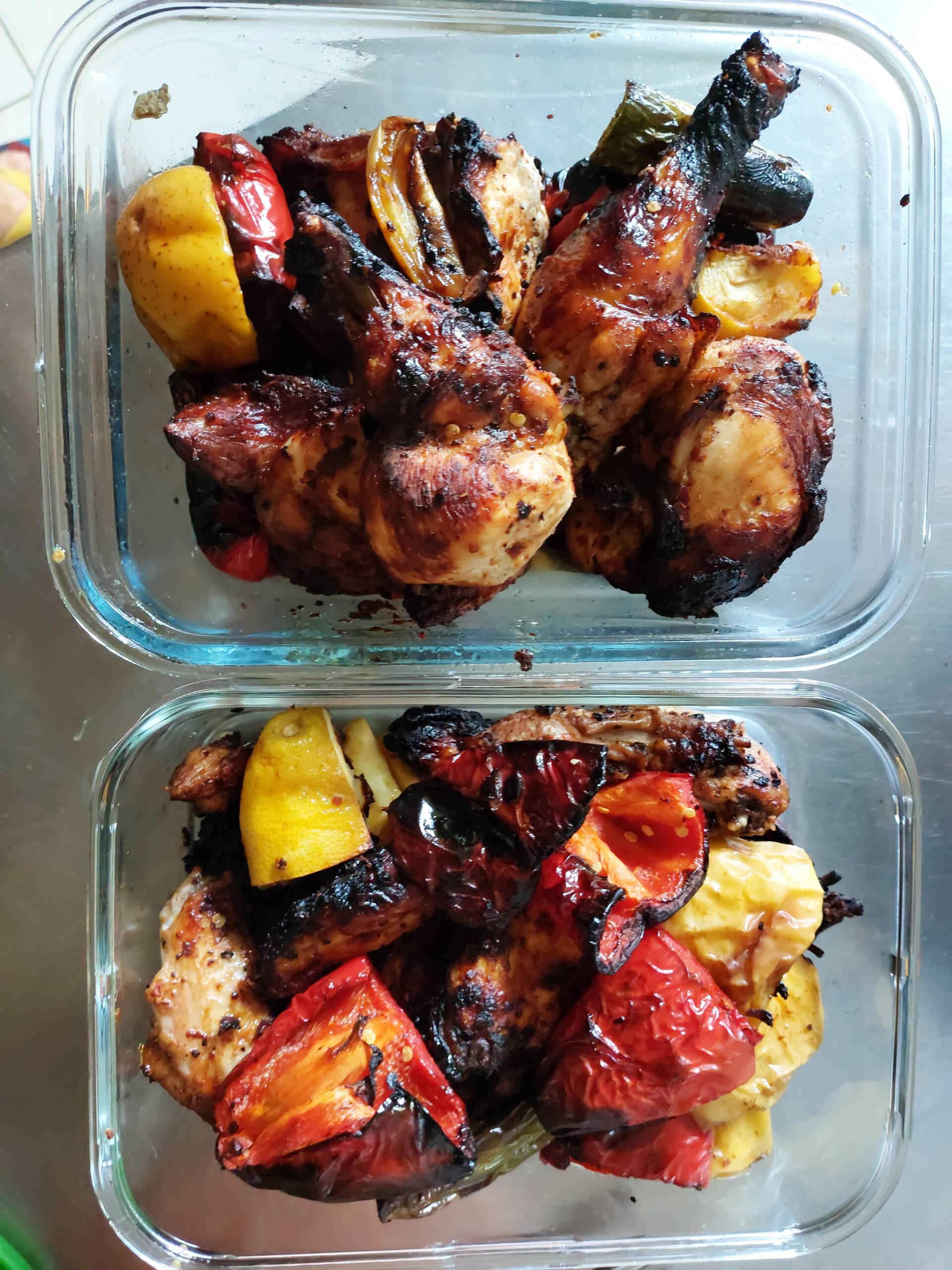
Times in recipes are a starting point. Ovens vary, birds vary, pans vary. Our oven-roasted chicken and vegetables gives you a time range, and with a thermometer you can ignore the clock and cook to the number instead.
Buy the fastest one you can afford. Then stop cutting into chicken to see if it’s done.
As an Amazon Associate I earn from qualifying purchases.