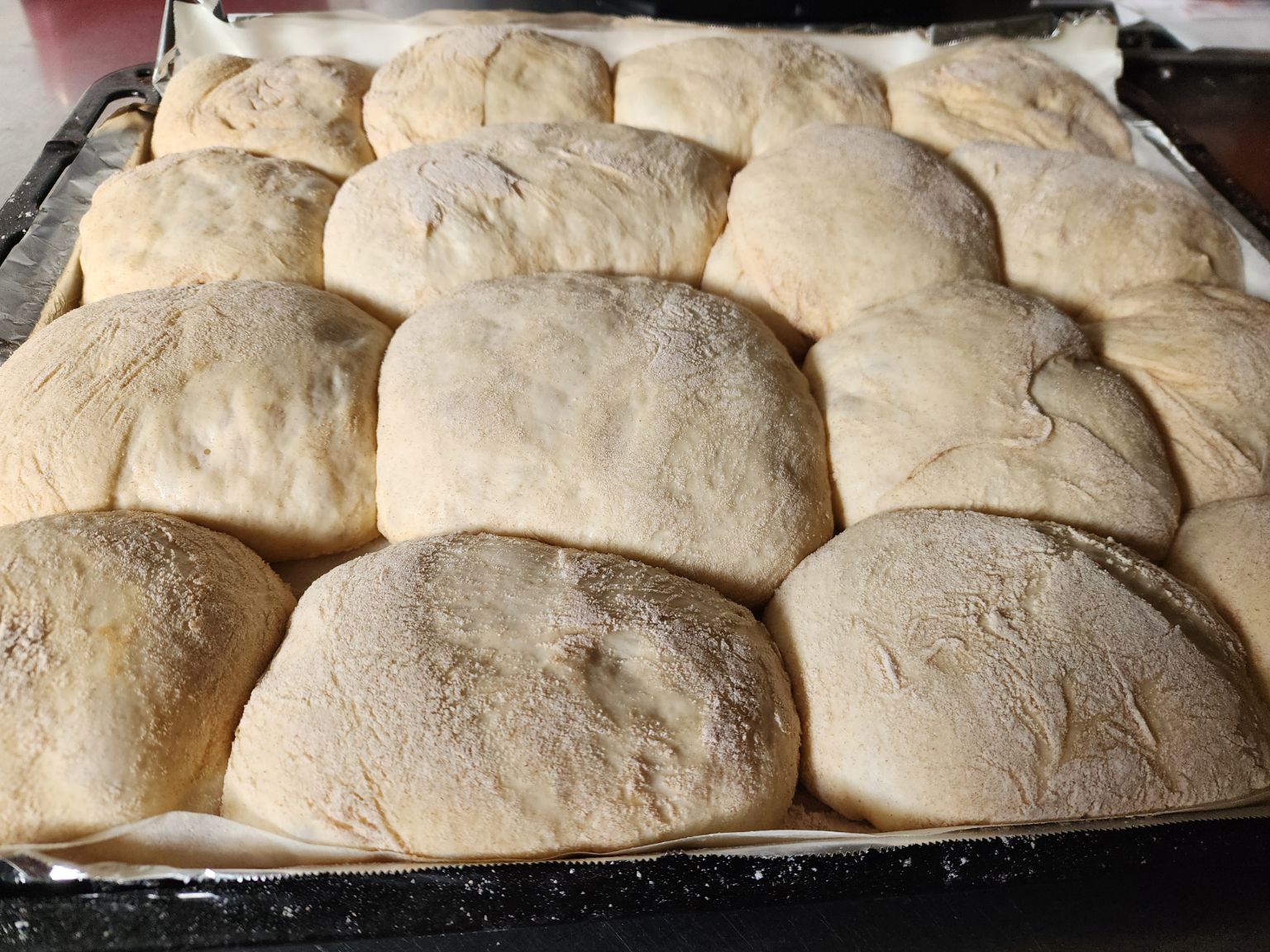
There is something particularly satisfying about baking ciabatta at home, especially when the transformation is as dramatic as it is in these two photographs. The first shows a crowded baking tray filled with pale, generously floured portions of dough, their irregular rectangular shapes pressed gently against one another. The surfaces are soft, slightly wrinkled and uneven, with the characteristic relaxed appearance of high-hydration bread dough.
Nothing looks particularly elegant at this stage, and that is precisely part of ciabatta’s charm.
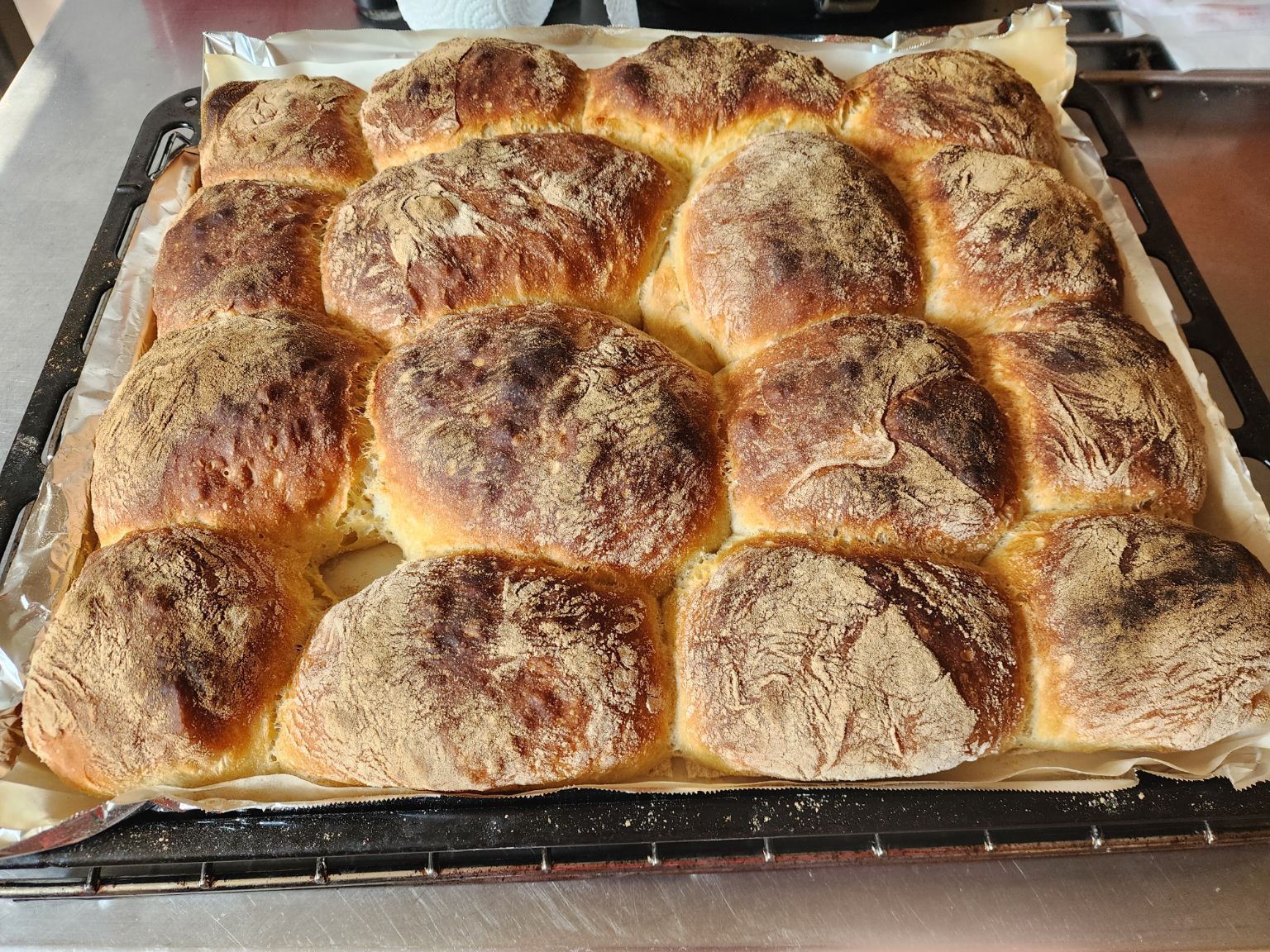
The second photograph captures the same tray after baking, and the difference is remarkable. The pale dough has become a collection of rustic Italian loaves with deep golden-brown crusts, darker toasted patches and a beautiful dusting of flour. The individual pieces have expanded, pushing against their neighbors and developing rounded tops with natural cracks and folds. Along the edges, lighter golden sections reveal where the dough has risen and stretched in the oven.
Unlike neatly shaped baguettes or conventional sandwich loaves, ciabatta celebrates irregularity. Its name means “slipper” in Italian, referring to the bread’s characteristically flat, elongated shape. Traditionally, ciabatta is made with a relatively wet dough, which helps produce an airy interior with large, uneven holes and a pleasantly chewy texture. The crust should be thin enough to bite through comfortably but sufficiently developed to provide a satisfying crunch.
These photographs also illustrate an interesting variation on the usual ciabatta presentation. Rather than baking a few long, separated loaves, the dough has been divided into numerous individual portions and arranged closely together on parchment paper. As the pieces rise and bake, they expand into one another, creating something between traditional ciabatta and a tray of rustic pull-apart rolls. It is a practical approach for home baking, particularly when the bread is intended for sandwiches, breakfast or sharing at the table.
The real pleasure comes when the bread is still slightly warm. Ciabatta needs very little accompaniment: good olive oil, ripe tomatoes, a little salt, perhaps mozzarella or roasted peppers. Its relatively open crumb also makes it excellent for absorbing olive oil and the juices of sandwich fillings without immediately becoming heavy. And, of course, yesterday’s ciabatta can become excellent bruschetta simply by slicing and toasting it.