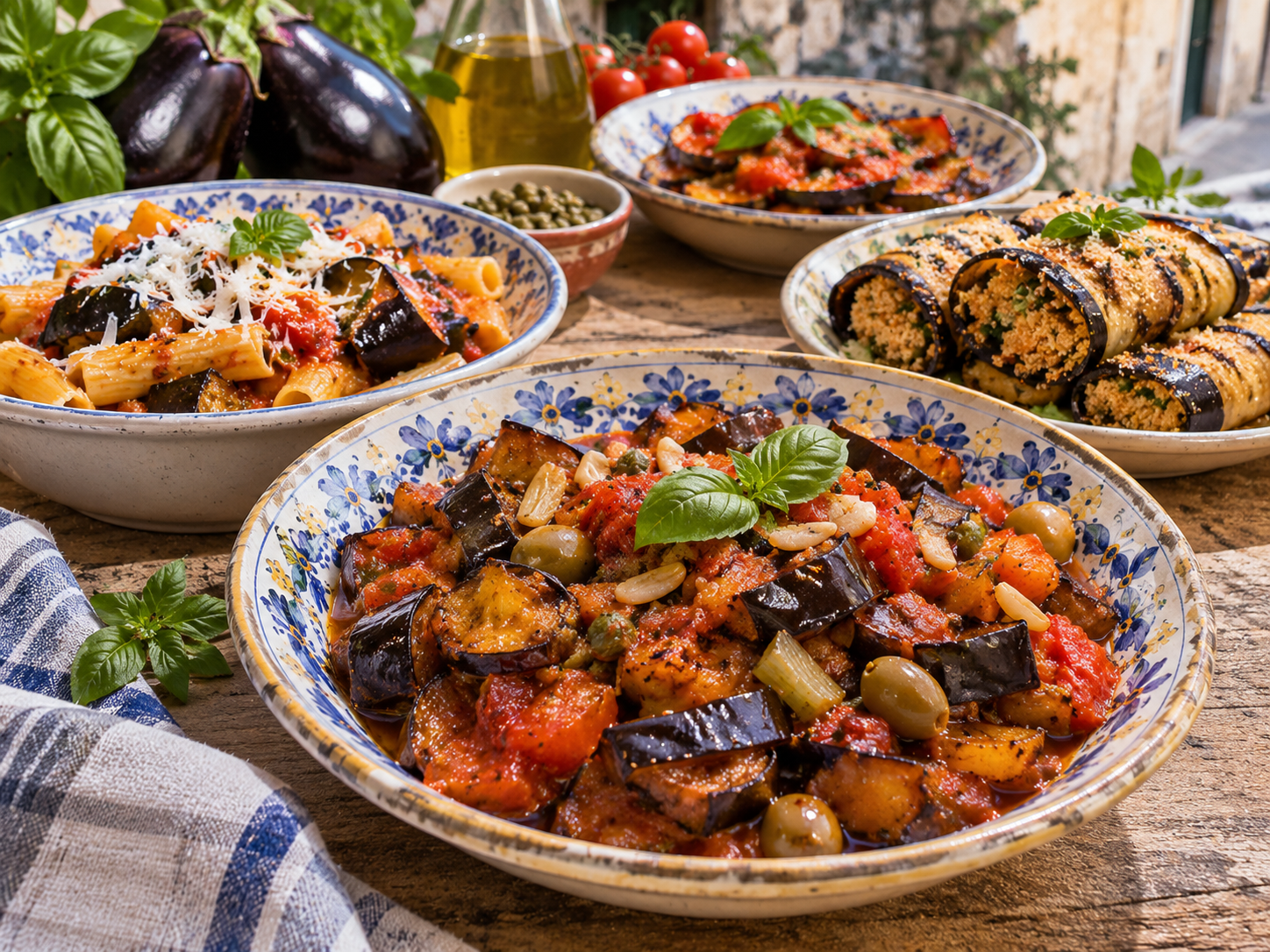
Eggplant, or melanzana, is one of the defining vegetables of Sicilian cooking. Across Palermo and the rest of the island, it is fried until silky, folded into sweet-and-sour caponata, layered with tomato and cheese, or tossed through pasta. Its mild flesh is almost a sponge for olive oil and flavor, which is why the method matters as much as the ingredients. Here are five approachable ways to cook ordinary eggplants at home, without making the dishes unnecessarily complicated.
1. Caponata siciliana, sweet-and-sour eggplant
Cut two medium eggplants into 2 cm cubes, salt lightly and pat dry. Fry in batches in olive oil until deeply golden, then set aside. In another pan soften one sliced onion and two chopped celery stalks. Add 400 g chopped tomatoes, two tablespoons of capers, a handful of pitted green olives and simmer for 10 minutes. Stir in three tablespoons of wine vinegar and one to two tablespoons of sugar, adjusting until pleasantly sweet and tart. Fold in the eggplant and cook another five minutes. Let cool completely before serving. Caponata is arguably better the following day, when its contrasting flavors have settled.
2. Pasta alla Norma, eggplant with tomato and ricotta salata
Cut one large eggplant into slices or cubes and fry until browned. Meanwhile simmer 400 g crushed tomatoes with two garlic cloves and olive oil for 15–20 minutes. Cook 250 g of rigatoni or spaghetti, reserve some pasta water and toss with the tomato sauce and fried eggplant. Add fresh basil and a generous shower of grated ricotta salata. This classic is associated with Catania, but it belongs on tables throughout Sicily. Ricotta salata is a firm, salty cheese, not the soft ricotta used in desserts.
3. Melanzane a funghetto, skillet-fried eggplant with tomato
Dice two eggplants into bite-sized pieces and fry in a wide pan with olive oil until browned. Remove excess oil if needed, add two chopped tomatoes and a crushed garlic clove, then cook uncovered for about 10 minutes until the tomato clings to the eggplant rather than forming a watery sauce. Season with salt, pepper and basil. This simple southern Italian skillet dish has several regional versions and works beautifully as a Sicilian-style vegetable side. Serve warm or at room temperature with bread.
4. Melanzane in agrodolce, eggplant with vinegar and mint
Slice two eggplants into thick half-moons or cubes and fry until golden and tender. Drain briefly on paper towels. In the pan warm two tablespoons of white wine vinegar with one teaspoon of sugar, a sliced garlic clove and a tablespoon of water. Return the eggplant and toss gently for a minute. Finish with fresh mint and a pinch of salt. Rest for at least 30 minutes before serving. The sweet-and-sour idea is unmistakably Sicilian, but the exact balance of vinegar and sugar is a matter of household preference.
5. Involtini di melanzane, rolled eggplant with breadcrumbs
Slice two large eggplants lengthwise into thin strips, brush with olive oil and pan-fry until flexible and lightly browned. Mix 100 g breadcrumbs with two tablespoons of grated pecorino, a tablespoon of raisins, a tablespoon of pine nuts, chopped parsley, a little garlic and enough olive oil to moisten. Place a spoonful on each slice, roll up and arrange seam-side down in a covered skillet with a few spoonfuls of tomato sauce. Cook gently for 10–15 minutes, until heated through. This is a stovetop adaptation of a dish frequently finished in the oven; the filling brings together savory, sweet and nutty notes familiar from Sicilian cooking.
For the most authentic everyday result, pay attention to texture. Eggplant should be fully tender, not squeaky or undercooked, and frying in small batches helps it brown instead of steam. You do not need to salt every modern eggplant to remove bitterness, although salting can help manage moisture. Caponata and agrodolce are particularly good made ahead, while pasta alla Norma is best eaten as soon as it reaches the table.