The tray of fried eggplant is what holds the eye. It sits on the stainless steel worktop at the front of the photograph, piled with uneven rounds and long slices, their dark purple skins curling around browned flesh. Some pieces have nearly black edges; others show broad golden centers. Behind it, a wide metal tray holds falafel, while the glass cabinet offers a whole different set of textures. Before anything goes into the bread, you can already see how the meal might come together.
The counter is packed without looking arranged for a photograph. There are pickled cucumber slices toward the back, red vegetables in the next compartment, a dark beet-colored salad at the left and pale yellow vegetables alongside it. Chopped tomato and green vegetables fill two central trays, with flecks of herbs running through the mixture. Two generous mounds of shredded pale cabbage rise above the surrounding ingredients. Spoons and tongs rest where the next hand will need them. Above the salads are stacks of round pita, some tucked into paper sleeves, and a cluster of translucent green dishes. A black portable speaker sits beside the metal holders and napkin dispenser. Small things, but they give the place its working rhythm.
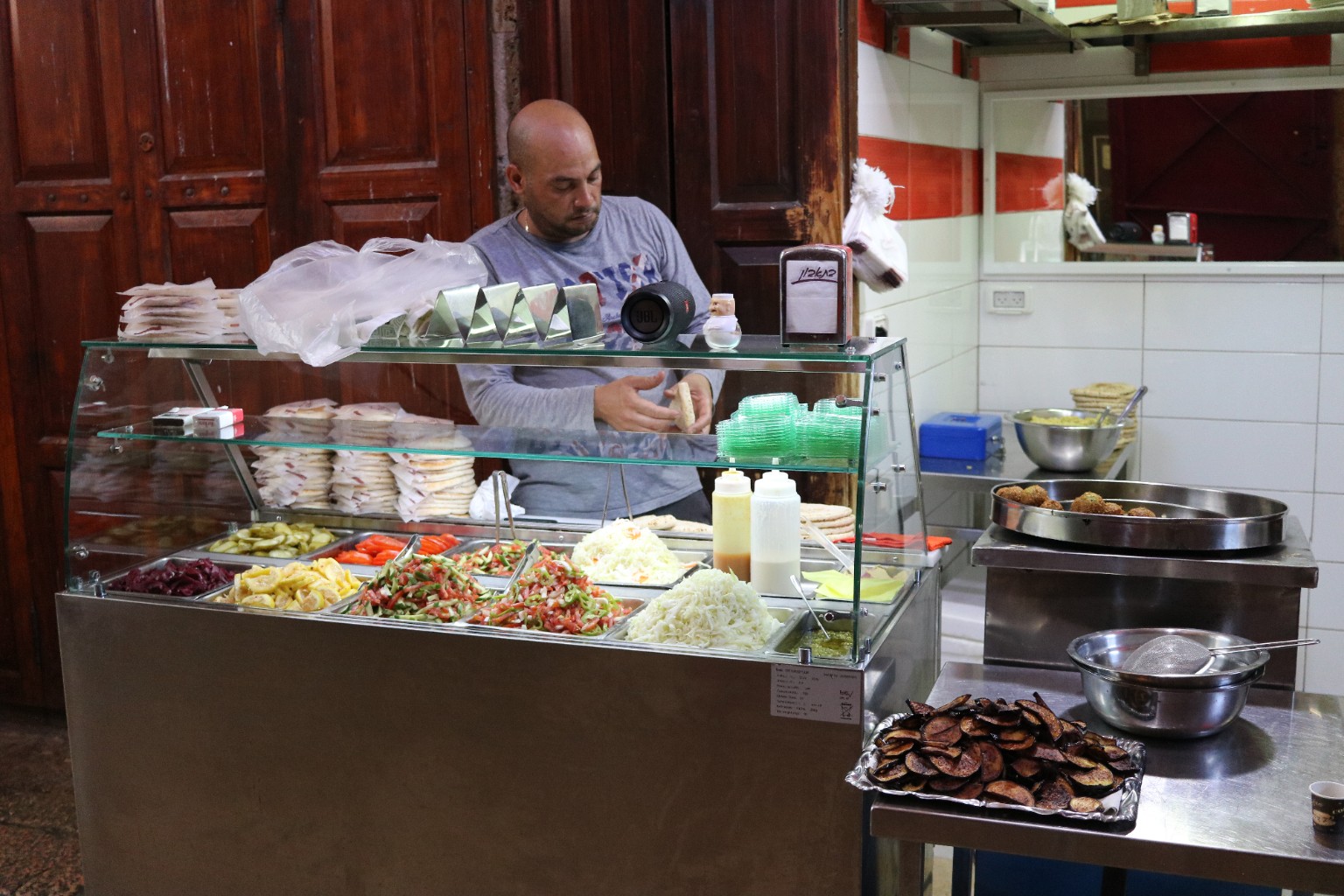
Behind the glass, the vendor looks down at a piece of bread held in his hands. The deep reddish brown wooden doors behind him make a warm backdrop to all that reflective steel. To the right, white tiles crossed by a red band frame the preparation area, where a mixing bowl and another stack of bread wait. There is no finished sandwich posed in the foreground. The photograph catches the useful part: ingredients ready, bread being handled, another order taking shape.
Fried eggplant earns its space in a sandwich through softness. Its browned surface gives way to flesh that can almost spread against the inside of the bread. Put it alongside falafel and you get a more substantial contrast than either ingredient provides alone. The falafel brings a rough crust and a crumbly center; the eggplant fills the gaps. A little is enough to change the character of a mouthful, though looking at that tray, restraint may take some effort.
The salads decide whether all that fried richness stays enjoyable to the last bite. Chopped vegetables bring moisture, cabbage gives the teeth something crisp to work through, and pickles interrupt the heavier flavors with acidity. Sauce has to find its way between those ingredients. Too much can overwhelm the bread; too little leaves separate pockets of dry filling. Loading everything generously is tempting, but the more interesting skill is distribution. A good pita should not make you eat through a wall of cabbage before reaching the falafel.
That is the appeal of this kind of street food counter: you can see the choices and watch someone turn them into lunch. The ingredients remain recognizable right up to the moment they disappear into the bread. No elaborate explanation is needed for a browned slice of eggplant or a spoonful of sharp pickles. You point, perhaps change your mind once, and make room for one more thing. Then the sandwich is handed over, and the next piece of pita comes out of the stack.