Ciabatta is one of those Italian breads that hardly needs an introduction, yet its possibilities extend far beyond the familiar sandwich with mozzarella, tomato and basil. Its relatively thin crust, airy interior and ability to absorb olive oil, meat juices and sauces without immediately falling apart make it an extraordinarily versatile foundation for everything from a quick breakfast to an elaborate street-food creation. The bread itself is simple, but what happens when you cut it open is another story entirely.
A photograph from a Palermo street market captures this idea rather beautifully. A long row of ciabatta rolls stretches across a vendor’s table, each split open and generously covered with sardines and anchovies, thinly sliced red onion, bright red tomatoes and an almost extravagant quantity of green olives. The contrast between the rich sardines, intensely savory anchovies, fresh vegetables and briny olives makes these sandwiches a celebration of Sicilian seafood. A vendor’s outstretched hand enters the frame, as though presenting the entire arrangement. There is nothing delicate or restrained about this food. It is colorful, abundant, slightly messy and designed to be eaten with enthusiasm.
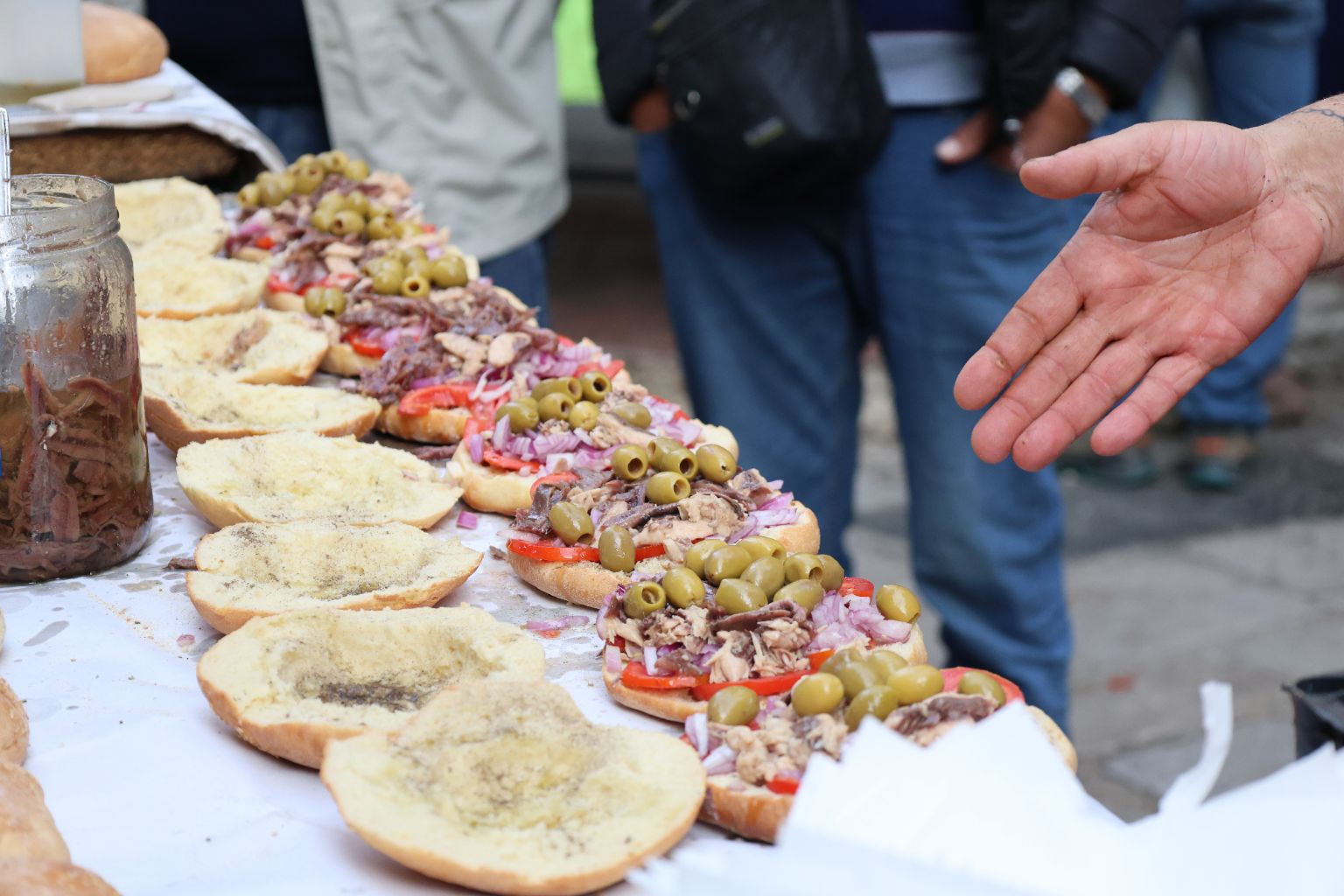
The photograph also demonstrates something important about Italian street food: good bread is not merely packaging for the ingredients. It is part of the dish, contributing texture, flavor and substance. The porous interior catches the olive oil, tomato juices and salty flavors of the fish, while the crust provides enough structure to hold everything together. This is where ciabatta really comes into its own.
Start with the Mediterranean pantry. Rub toasted ciabatta with garlic, drizzle it with extra-virgin olive oil and add chopped tomatoes, capers and oregano. Replace the tomatoes with roasted peppers, eggplant or zucchini and the same bread becomes a different lunch. A spoonful of ricotta underneath the vegetables softens their intensity; a little pecorino on top gives the sandwich a sharper finish. Sun-dried tomatoes, artichokes, olives, basil pesto and preserved lemon can each take the combination in another direction.
Seafood opens another world. Sardines and anchovies, as in the Palermo photograph, are a particularly expressive combination: the sardines supply body and richness, while the anchovies bring concentrated savory intensity. Tuna with lemon and parsley is another choice, but tuna with olives, red onion and capers is bolder. Sardines with fennel and orange bring a distinctly Sicilian character. Anchovies with butter, or with tomatoes and oregano, offer an intense contrast between richness and salt. Smoked mackerel with pickled onion and a touch of mustard works surprisingly well too. The secret is not to pile on everything at once, despite the temptation. A few assertive ingredients usually do more than ten competing ones.
Then there is the warm ciabatta. Fill it with grilled sausage and bitter greens, roast pork and rosemary, or thin slices of beef with roasted peppers. Try mushrooms sautéed with garlic and thyme, finished with melting provolone. For a vegetarian variation, combine warm eggplant, tomato sauce and mozzarella, then press the sandwich briefly until the cheese begins to soften. Even yesterday’s roasted vegetables can find a second life this way.
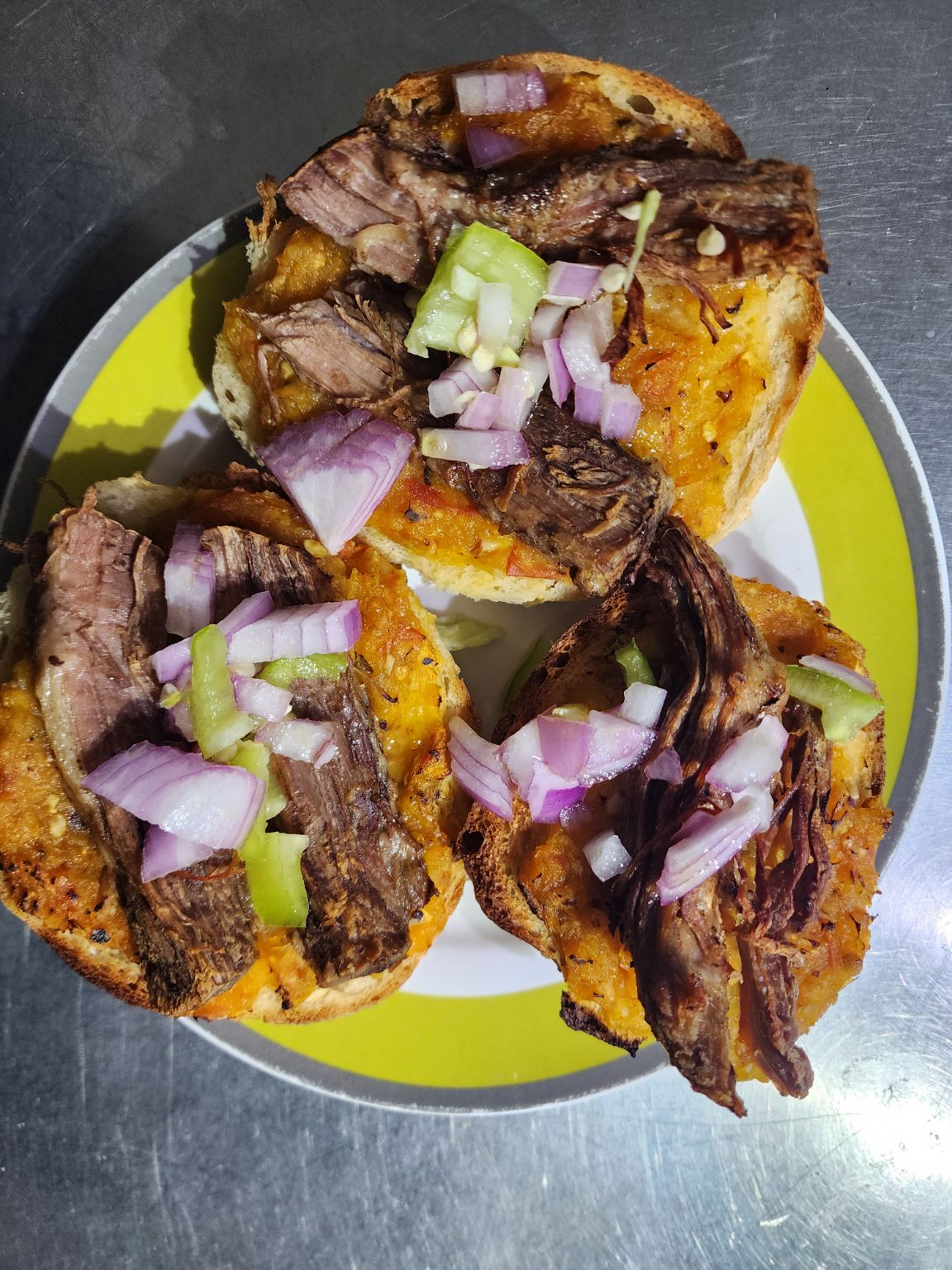
Ciabatta with beef, salsa, chili and onions takes the warm sandwich in a more robust direction. In the accompanying photograph, three open-faced pieces of toasted bread sit on a yellow-rimmed plate, each spread with a thick orange-red salsa and covered with generous slices of browned beef. Chopped red onion brings a fresh, sharp crunch, while pieces of green chili provide heat. The meat has dark edges and visible fibers, contrasting with the bright salsa beneath it. It is a wonderfully unfussy combination: hearty beef, juicy sauce, crisp onion, chili and toasted bread, all in one bite. For a version at home, warm sliced cooked beef, spoon a thick tomato-and-pepper salsa onto lightly toasted ciabatta, add the beef, and finish with chopped onion and fresh chili. A squeeze of lemon or lime can brighten the richness.
Ciabatta is equally persuasive at breakfast. Scrambled eggs with chives, fried eggs with sautéed spinach, or ricotta with honey and toasted nuts make it more interesting than ordinary toast. For a sweet version, add mascarpone and fresh figs, or sliced pears with a little honey. Toasted ciabatta with butter and good marmalade is hardly revolutionary, but sometimes that is precisely the point.
The bread can also move beyond sandwiches altogether. Cut it into cubes for panzanella, toast slices for crostini, turn stale pieces into crunchy croutons for soup, or use thick slices beneath slow-cooked beans and their broth. Ciabatta absorbs sauces particularly well, which makes it a useful companion to braised meats, stews and dishes built around tomatoes and olive oil. Leftover bread need not be an afterthought.
There are a few practical tricks. Toast the cut surfaces lightly when the filling is wet, so the crumb retains some structure. Put a layer of cheese or greens between bread and juicy tomatoes if the sandwich must travel. Season the vegetables separately rather than expecting the filling to season itself. And remember that ciabatta comes in different sizes and textures: a small roll suits a heavily filled sandwich, while a larger loaf can be sliced into shareable portions.
What makes ciabatta so appealing is that it invites improvisation. Palermo’s overflowing sardine-and-anchovy sandwiches represent one exuberant possibility, while beef with salsa, chili and onions offers an entirely different experience. The same bread can become a modest breakfast, an elegant appetizer, a satisfying vegetarian lunch or a substantial dinner. There may not literally be a thousand ways to fill a ciabatta, but once you start combining Italian pantry ingredients, seasonal vegetables, cheeses, fish and meats, a thousand no longer sounds like much of an exaggeration.