Some foods are best appreciated when we stop trying to improve them. Mortadella is one of those foods. A few thin slices, fresh bread, perhaps a glass of something refreshing, and lunch is already sorted. No elaborate recipe, no parade of condiments, no culinary performance required.
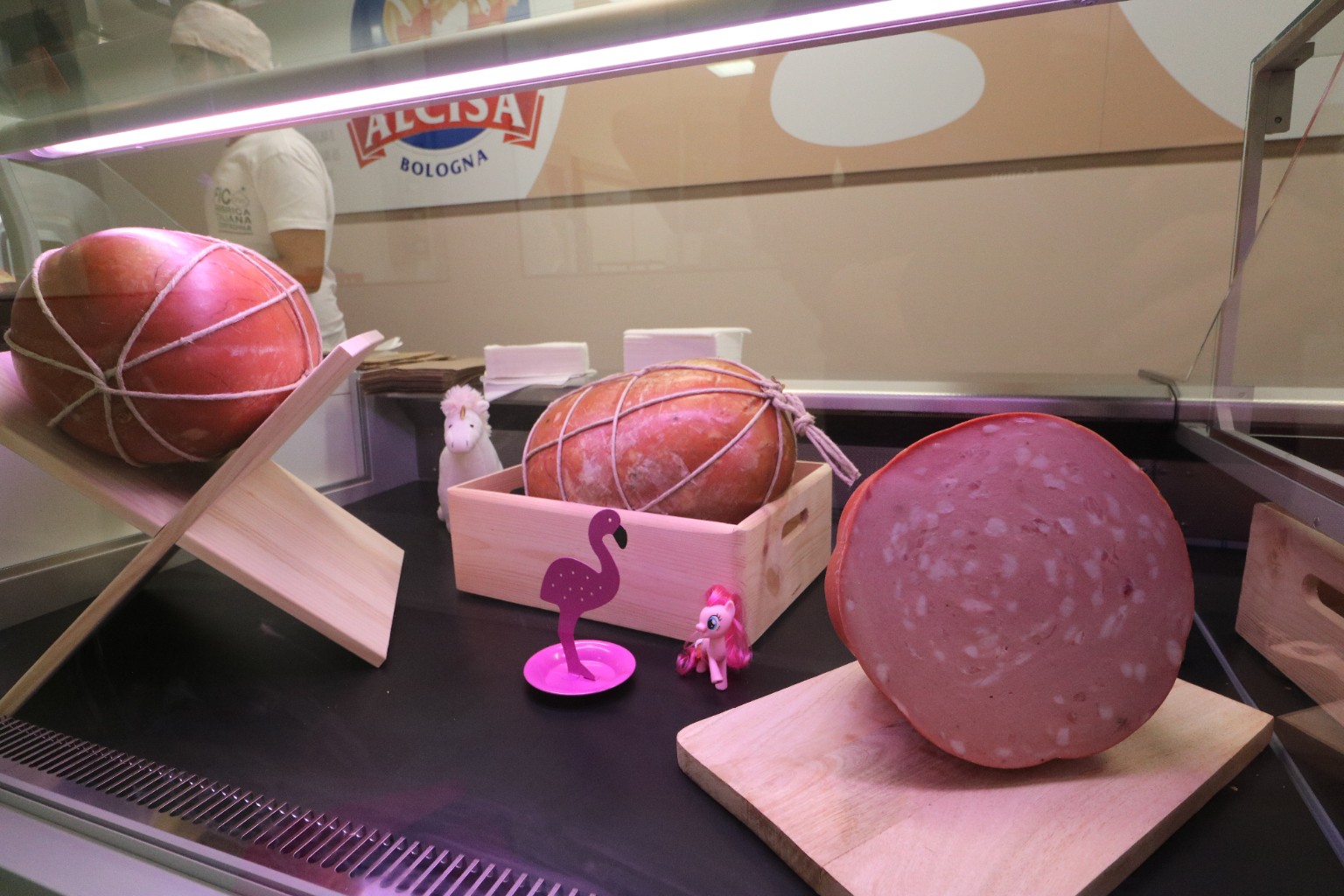
Look closely at a proper slice. Its soft pink surface is dotted with irregular white pieces of fat, a visual signature of the sausage rather than something to trim away. The texture is supple and the flavor mild, with the seasoning taking a supporting role. It should not fight the bread or overwhelm the palate. That restraint is precisely what makes it so easy to eat another slice.
The counter in our photograph makes a wonderfully odd little stage for this unpretentious ingredient: enormous tied rounds resting on angled wooden boards, a cut end nearly the size of a dinner plate, and, improbably, a tiny pink flamingo and toy pony standing guard. The display is playful, but the meat itself needs no gimmick. The Alcisa Bologna sign overhead reminds us where this particular food tradition belongs.
For a sandwich, start with bread that tastes good by itself. A crusty roll offers contrast; soft focaccia makes the whole thing feel more luxurious. Fold thin slices loosely rather than pressing them into a dense stack. This gives the mortadella room to breathe, so to speak, and makes every bite pleasantly airy. If you want an addition, try a little mild cheese or a few pistachios. But taste the plain version first.
Temperature matters more than people expect. Straight from a very cold refrigerator, the aromas can seem muted. Give the slices a few minutes before serving, while keeping food safety in mind, and the flavor becomes more expressive. And resist the temptation to bury them under mustard, pickles, or a heavy dressing. There are sandwiches for that; this is not necessarily one of them.
Mortadella can also anchor a quick aperitivo plate. Arrange a few folds beside bread, olives, and something crisp and fresh. Or dice it for a casual snack. You could certainly cook with it, and Italian kitchens do, but there is something persuasive about a food that is fully ready to enjoy the moment the shopkeeper hands it across the counter.
When buying, ask for a taste if the shop permits it. Look for a pleasant aroma, an even but not rubbery texture, and balanced seasoning. Choose a small quantity freshly sliced rather than a huge packet you will leave forgotten in the fridge. The pleasure is immediate, and that is the point.
Even its name carries a little culinary mystery. One explanation traces mortadella to the Latin mortarium, the mortar used to pound meat into a fine mixture, an apt ancestor for this unusually smooth sausage. Another theory links it to myrtatum, meat seasoned with fragrant myrtle berries, an aromatic used in Mediterranean cooking before black pepper became widely available. Neither origin has been conclusively established. Bologna later became the sausage’s celebrated home, with production regulated there as early as 1661. The city’s name also survives in American “bologna,” although the familiar American sandwich meat can be quite different from traditional Mortadella Bologna.
In an age of increasingly complicated food, mortadella offers a modest proposition: quality ingredients, careful preparation, and the confidence to leave well enough alone. Sometimes the best recipe is simply to unwrap the paper from the delicatessen, tear open a good roll, and eat.