A blender chops. A mortar and pestle crushes, bruises and grinds, and that’s a different thing. Crushed garlic and chilli release their oils into each other. A pounded curry paste is smoother and more fragrant than a blitzed one. And a papaya salad made in a blender is just shredded papaya swimming in dressing.
The trouble is that “mortar and pestle” covers several tools that do different jobs. Buy the wrong one and you’ll wonder why anyone bothers.
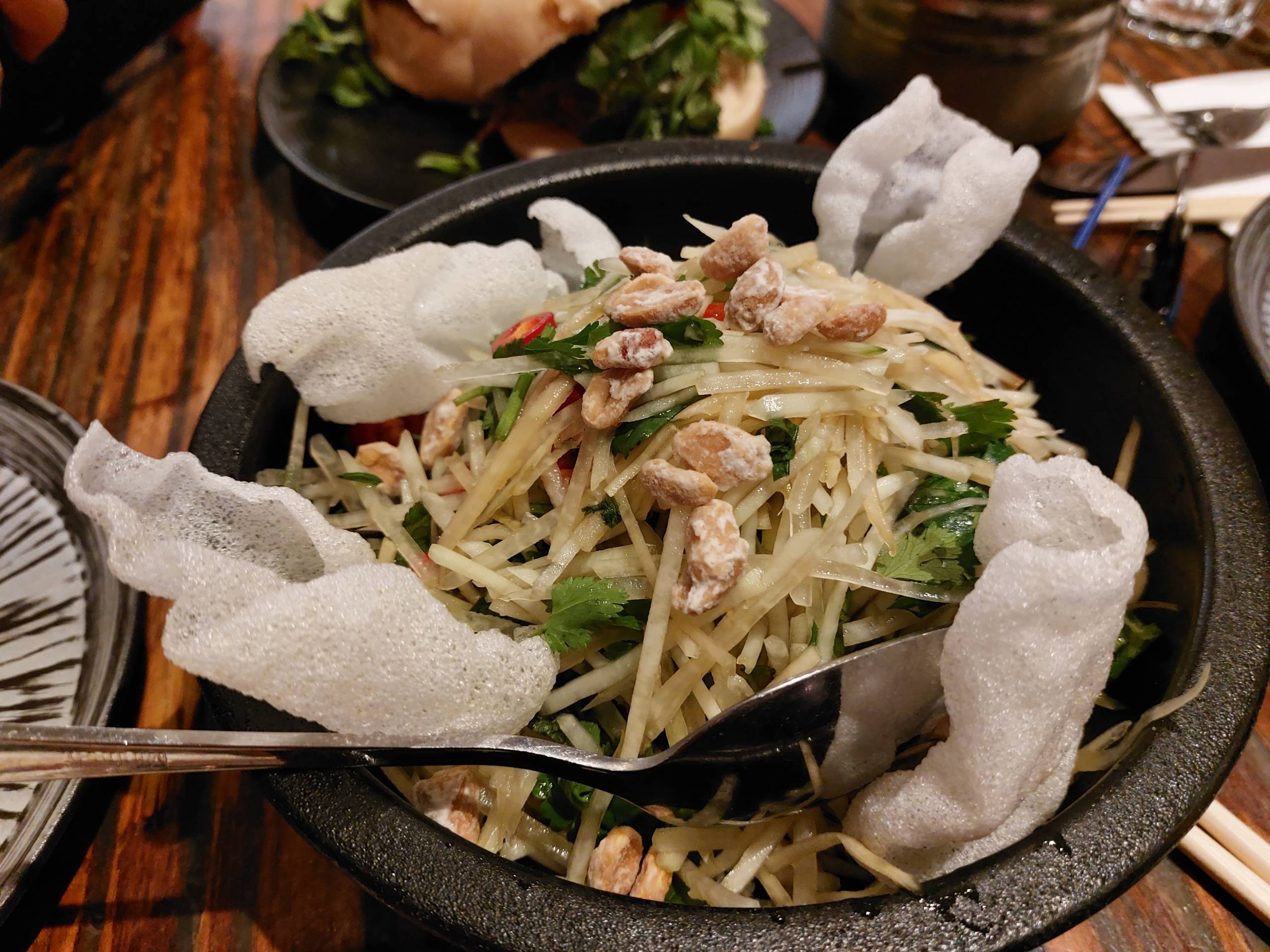
Thai cooks are a useful guide here, because a Thai kitchen usually has two: a heavy stone one for pastes and a tall clay one for salads.
Clay and Wood for Salads
The clay mortar, a krok, is tall and deep with a wooden pestle. It’s what som tum is made in, and it’s built for bruising, not grinding. You crush the garlic and chillies, then add long beans, tomatoes, dried shrimp and the shredded papaya, and work them with the pestle in one hand and a spoon in the other, folding and pounding at the same time.
The light wooden pestle against the clay presses the dressing into the vegetables without turning them to mush. Use a granite mortar for this and you’ll pulverise the tomatoes and split the beans.
A Thai clay mortar with a wooden pestle is inexpensive. Clay can crack if you pound too hard on an empty bowl or drop it, so treat it as a salad tool and nothing else. Our som tum is the dish to make first.
Granite for Pastes and Spices
For curry paste, pesto, spice blends and anything that needs to be ground fine, you want weight. A heavy granite mortar with a granite pestle does the work for you. You lift the pestle and let it drop, rather than pushing.
Size is the thing most people get wrong. Small mortars look tidy on the counter and are useless in practice, because everything jumps out. Get one with a bowl at least 15 cm across inside, and heavier is better.
The widely sold ChefSofi granite mortar and pestle is a good-value, unpolished granite set with about a two-cup bowl, big enough for a batch of pesto. For serious curry paste work, look at a large Thai granite mortar, the heavy grey kind sold in Asian grocery shops. It’s ugly, it weighs a ton, and it’s the right tool.
Avoid polished interiors. Smooth stone looks good but the ingredients slide around instead of breaking down. You want a slightly rough surface for grip.
Volcanic Stone for Salsa and Guacamole
The Mexican molcajete is carved from volcanic basalt, porous and rough, with a three-legged base. It’s brilliant for salsa and guacamole, and it doubles as a serving bowl.
A Vasconia molcajete is a widely available choice. Whichever you buy, season it before the first use. Grind a handful of dry rice to powder, rinse, and repeat until the rice comes out clean instead of grey. Then do the same with garlic, cumin and salt. It takes twenty minutes and stops grit ending up in your salsa.
Marble Is for Light Work
Marble mortars, like the Cole & Mason marble mortar and pestle, are fine for cracking peppercorns and crushing a few seeds. They’re usually polished and smaller, so they struggle with wet pastes. Think of one as a spice crusher that looks nice on the shelf.
If You Only Buy One
Buy the big granite one. It handles pastes, pesto, spices and a passable small-batch salsa. Add the clay krok if you fall for Thai salads, which, after the first proper som tum, you probably will.
Never put any of them in the dishwasher. Rinse with hot water and a brush, skip the soap on porous stone, and let them dry completely before you put them away.
As an Amazon Associate I earn from qualifying purchases.