A counter changes the scale of a meal. The plate is close, the next person is close, and the distance between choosing something and eating it can be no more than a turn of the wrist. You see the bread being cut, a glass being filled or a hot dish passing toward someone farther along. Even a simple order becomes part of the room’s movement.
That proximity is the attraction. At a table, the meal can form a small private world; at a counter, the surroundings keep entering the conversation. You notice which dish appears repeatedly, how the staff organize a busy service and what can be eaten comfortably in the space available. There is pleasure in giving a small plate your full attention, then deciding whether to order another. A meal can develop one modest decision at a time.
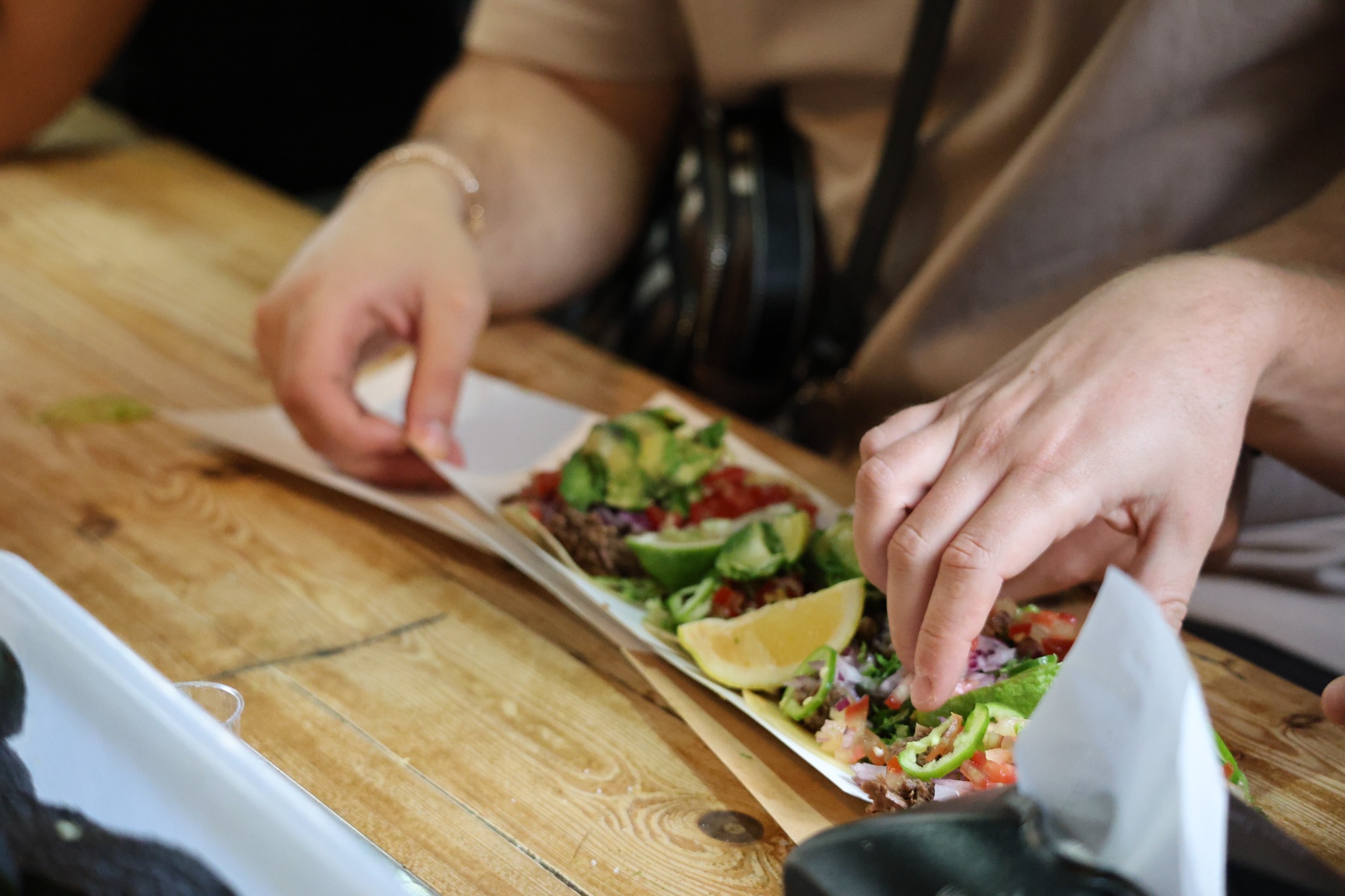
The photograph catches that closeness in a very ordinary gesture: a diner reaching for a taco on a honey-colored wooden counter. A long, narrow white tray runs diagonally across the frame, lined with paper and crowded with open tacos. Pale green avocado pieces rise above diced red tomato, finely chopped purple onion and leafy herbs, while glossy green pepper rings lie across the filling. A lime wedge and a larger yellow citrus wedge sit within easy reach. The food spills loosely toward the edges of the tray; this is a meal already being eaten, with little interest in staying perfectly arranged. One hand holds back the paper while the other reaches toward the nearest taco. A fine bracelet catches the light, a black camera hangs against the diner’s taupe-colored top, and the grain and knots of the counter fill the space around the food. Faces and most of the room fall outside the frame. What remains is the part you remember from a good counter lunch: bright toppings, hands close to the food and just enough space to settle in.
Start by working out how the particular place operates. Some counters are for ordering and collecting food, others are seating, and some need to remain clear for service. Watch briefly or ask. A display of food does not by itself tell you whether to help yourself, point to a choice or wait for someone to take an order. The local routine is more useful than a rule you remember from another city.
Order something manageable first. A slice of bread with tomato, a small plate of peppers or a simple sandwich can tell you plenty about the kitchen’s attention. Notice temperature, texture and seasoning. Is the bread still crisp where it needs to be? Has the fried food arrived while it is worth eating immediately? A short menu does not guarantee quality, but it can make the decisions easier to follow.
The counter also makes service visible without turning it into a performance you are entitled to interrupt. Staff are working, and the space behind the surface may be tight. Keep a bag out of the passage, leave room for plates and avoid placing a phone where it will obstruct the next order. A brief exchange can be part of the pleasure, though nobody owes a visitor a conversation during a rush.
For a solo traveler, this arrangement can remove some of the ceremony of eating alone. There is something to watch, a natural direction to face and often a simple way to order a little rather than committing to a long meal. It does not suit every body or every occasion. High stools, limited back support, noise and crowding can make a table much more comfortable. Choosing one is no failure of adventurous eating.
Food photography needs restraint in this setting. A quick frame of your own plate can preserve the moment without rearranging the service area. Watch mixed lighting and the tendency of a close wide-angle view to stretch the plate at the edge. Keep other customers and staff out of the picture unless their inclusion is welcome. Most of all, eat the hot food while it is hot. A perfect photograph of a tired croquette is a rather uneven bargain.
Counter dishes work well when they make their own case. The pan con tomate article looks at one example whose appeal depends on good ingredients and timing. Padrón peppers offer another: a small serving with enough texture, salt and warmth to deserve attention. Neither needs elaborate presentation to make the stop worthwhile.
The meal may end after one plate, or it may slowly become dinner. That flexibility is part of the counter’s charm. You are close enough to the food to respond to what looks good and close enough to the room to feel its pace. Sometimes the best memory is a complicated dish. Sometimes it is standing in the right place with good bread, a warm plate and no particular reason to hurry.